If you have ever paid a freelancer to build your website, design your logo or write your product copy, you may assume the business owns the result. Under UK law, that assumption is often wrong. The question of who owns intellectual property in commissioned work has a simple starting point: the person who made it owns it, unless they were your employee or they have signed it over to you. Paying the invoice does not change that.
This post is written for founders and small company owners. It explains why your company may not own its own code, brand or content, how to check, and what to do about it.
Who owns intellectual property by default?
For copyright, the "author" of a work is the person who creates it, and the author is the first owner of the copyright (CDPA 1988, s 9(1) and s 11(1)). Copyright covers most of what a modern small business relies on: website code, software, logos and artwork, photos, written content, course materials and manuals.
There is one general exception. Where an employee makes a work in the course of their employment, the employer is the first owner, subject to any agreement to the contrary (CDPA s 11(2)). "Employee" here means someone employed under a contract of service or apprenticeship (CDPA s 178). A freelancer, contractor, consultant or agency is not your employee, so the exception does not help you.
So, does a freelancer own the work? By default, yes. They own the copyright in what they made for you, and you have, at most, permission to use it.
Why your company may not own its own code, brand or content
The gaps usually sit in three places.
Work bought from freelancers and agencies. The developer who built your platform, the designer who drew your logo, the copywriter who wrote your site. Unless each signed a written assignment, they still own it. Agencies add a layer: an agency can only pass on what it owns, so if it used its own freelancers, it needs assignments from them first.
Work made before the company existed. Founders often build the first version of a product, choose a name and register a domain before incorporating. A company cannot own anything made before it was formed. Whoever made it owns it, and each founder needs to assign it into the company.
Work made by directors with no employment contract. Being a director does not automatically make someone an employee. A shareholder-director can be an employee, but whether they are is a question of fact (Secretary of State for BERR v Neufeld [2009] EWCA Civ 280 at [80] to [81]). If there is no genuine employment contract, the employer-ownership rule may not apply to what the director makes.
Designs follow a similar rule. Since 1 October 2014, the person who commissions a design no longer owns it automatically; the designer does, unless the design is assigned (Intellectual Property Act 2014, s 2, amending CDPA s 215). Designs commissioned under contracts made before that date keep the old rule (s 2(3)).
What happens if there is no paperwork?
Courts can sometimes find that the client owns the work "in equity" even without a written assignment. In the Dr Martens logo case, a freelance designer working through an agency was the first owner of the copyright, but the Court of Appeal upheld a finding that the client was the owner in equity (R Griggs Group Ltd v Evans [2005] EWCA Civ 11, at [4] to [6] and [25]). That took a trial and an appeal to establish. An implied licence or equitable ownership is an argument you might win, not a position you can rely on when an investor or buyer asks you to prove title. Our post Who actually owns the logo? looks at this from the creative agency side.
How to make sure your business owns what it paid for
The fix is a written assignment, signed by the person who owns the work. An assignment of copyright is not effective unless it is in writing signed by or on behalf of the assignor (CDPA s 90(3)). A purchase order, a paid invoice or a friendly email saying "it's all yours" will not usually do the job.
A few practical points:
- Sign before the work starts if you can. An agreement signed by the prospective owner can assign future copyright, so the work vests in you as soon as it is made (CDPA s 91(1)).
- Put an IP clause in the contract, and make it say "assign". "Licence" and "assignment" are different things. If you only need permission to use something, a licence may be fairer and cheaper. Our post on IP in commercial contracts: retain, licence-on-payment, or assign? sets out the options.
- Deal with moral rights. Authors have rights to be identified and to object to derogatory treatment. These cannot be assigned, but they can be waived in signed writing (CDPA s 87(2)).
- Collect the files. Owning the copyright in software is of limited use without the source code, editable design files, domain transfer codes and admin logins.
- Tidy up the past. If work was done years ago without paperwork, a confirmatory assignment can put things right between you and the person who made it. It cannot undo anything they did with the work before signing, such as licensing it to someone else, so ask.
If you are hiring a contractor now, a proper services agreement with an IP clause is the place to start. The Subs & Support pack covers contractor engagements.
What the Made & Owned pack covers
The Made & Owned IP pack is built for this problem. It includes:
- an IP Register spreadsheet, to list what the business relies on, who made it and whether there is signed paperwork, so you can see the gaps;
- an IP Assignment Deed with three routes: founder into company, freelancer or agency deliverables, and confirmatory assignment of past work. It includes a moral rights waiver, a handover clause for code, files and domains, and a schedule for the freelancer to disclose their own tools, third-party materials and any generative AI used;
- Company Approvals (a board minute and members' written resolution) and a Signing Day Checklist for founders assigning IP to their company.
For founders, the deed offers a £1 consideration route and a shares route. The £1 must actually be paid. A nominal price does not switch off the rest of the law: if the founder is a director and the IP is valuable enough, members' approval may still be needed under Companies Act 2006, s 190 (the thresholds are in s 191), and HMRC may look at market value whatever price you state. Take advice from your accountant before you sign. If you are issuing shares for the IP, use the pack's Company Approvals document.
If you are the freelancer rather than the client, the Creatives pack is the better starting point. Common questions are answered on the Made & Owned FAQ page.
When you need a solicitor, not a template
Use a template when the parties agree and simply need it written down. Speak to a solicitor if a freelancer or former founder refuses to sign or cannot be found, if someone is already claiming to own something you rely on, if the IP is central to a fundraising or sale, or if the work includes an invention you may want to patent (in which case speak to a patent attorney before telling anyone about it).
This is general information, not legal advice on your situation.
Make sure your business owns what it paid for: see the Made & Owned IP pack.
Sources
- Copyright, Designs and Patents Act 1988, s 9
- Copyright, Designs and Patents Act 1988, s 11
- Copyright, Designs and Patents Act 1988, s 87
- Copyright, Designs and Patents Act 1988, s 90
- Copyright, Designs and Patents Act 1988, s 91
- Copyright, Designs and Patents Act 1988, s 178
- Copyright, Designs and Patents Act 1988, s 215
- Intellectual Property Act 2014, s 2
- Companies Act 2006, s 190
- Companies Act 2006, s 191
- Secretary of State for BERR v Neufeld [2009] EWCA Civ 280
- R Griggs Group Ltd v Evans [2005] EWCA Civ 11
Make sure your business owns its IP
IP: Made & Owned has the IP assignment deed, one-way and mutual NDAs, an IP licence and company approvals for UK businesses. Questions first? Read the IP FAQ.
Related reading
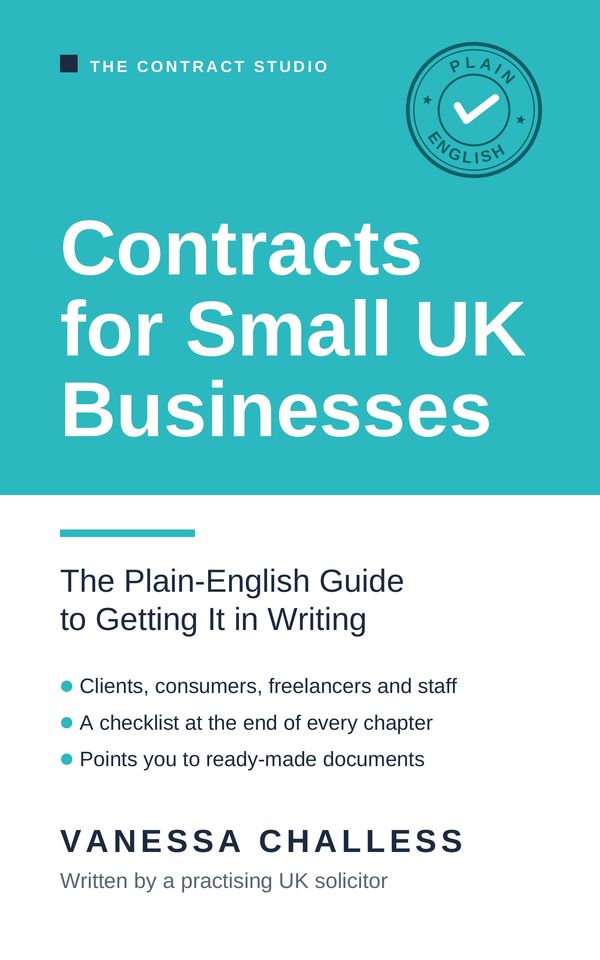
The Contract Studio Guides
Contracts for Small UK Businesses
The Plain-English Guide to Getting It in Writing
Get it in writing before it matters. A plain-English guide for small UK business owners, freelancers and first-time employers, by a practising UK solicitor.