Limiting your liability is the grown-up part of writing T&Cs. Without a
cap, you're theoretically on the hook for every imaginable loss. With a
badly written cap, you're on the hook and your clause might get thrown
out as unfair. UK law doesn't mind you protecting yourself, but it does
insist on reasonableness, especially in consumer contracts.
The legal backdrop
In business-to-business contracts, UCTA
1977 polices exclusion and limitation clauses using a "reasonableness" test.
In consumer contracts, CRA
2015 adds much stricter controls, particularly around attempts to exclude
statutory rights or cap liability in ways that create a significant
imbalance. Excluding liability for death or personal injury caused by
negligence is banned outright.
Typical cap structures
Most sensible T&Cs use one of a few patterns:
A cap linked to the fees paid or payable under the contract.
A cap linked to a multiple of those fees.
A cap aligned with the trader's insurance limit.
A fixed-sum cap for small, low-risk contracts.
The clause then lists categories of loss that are excluded, such as loss
of profits or data, while preserving liability for things that legally
can't be
excluded.
What gets thrown out
Caps that attempt to exclude all liability, or that are wildly
disproportionate to the transaction, are prime candidates for being
struck down as unfair, particularly in consumer contracts. CRA
guidance makes it clear that terms undermining core rights can be challenged.
Courts and regulators are unimpressed by microscopic caps buried in the
small print.
Balancing risk and reality
A sensible cap should reflect the size of the deal, your ability to
insure against it and the practical risk profile of your work. You
cannot design a clause that magically removes all risk; you can design
one that keeps claims in a predictable band if something genuinely goes
wrong.
How Trading Terms handles liability
Trading Terms writes consumer terms, so it does not try to cap your
liability to consumers at all. Instead it uses the approach the Consumer
Rights Act 2015 allows: you are responsible for loss that is a foreseeable
result of breaking the terms, not for unforeseeable loss, and not for
business losses, because you supply for domestic and private use. It then
states plainly what can never be limited, such as death or personal injury
caused by negligence, fraud and the customer's statutory rights. If you
need a negotiated cap for business customers, that belongs in separate
B2B terms.
Configure your T&Cs in 10 minutes — Build my Trading Terms →
Build your own terms
Selling to consumers? Trading Terms builds plain-English T&Cs for your business from a short set of questions. See the Trading Terms FAQ for what it covers.
Related reading
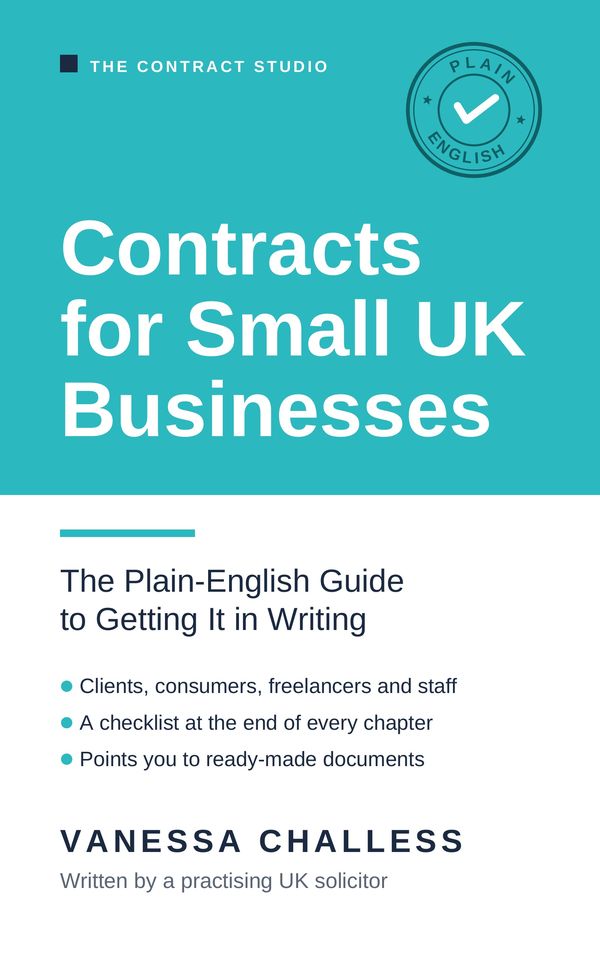
The Contract Studio Guides
Contracts for Small UK Businesses
The Plain-English Guide to Getting It in Writing
Get it in writing before it matters. A plain-English guide for small UK business owners, freelancers and first-time employers, by a practising UK solicitor.