The Digital Markets, Competition and Consumers Act 2024 (the DMCC Act 2024) is mostly discussed in terms of big tech and household-name retailers. But its consumer rules apply to every business that sells to the public, including a one-person online shop. This post covers the parts most likely to affect a small seller: pricing, reviews, pressure tactics, and the subscription rules that are not yet in force. If you are doing a wider review of your paperwork, it pairs well with our 2026 legal housekeeping checklist.
What changed on 6 April 2025
The consumer protection parts of the Act came into force on 6 April 2025 (DMCC Act 2024 (Commencement No. 2) Regulations 2025, reg 2). Two things changed for traders.
First, the rules on unfair commercial practices moved into the Act itself, replacing the Consumer Protection from Unfair Trading Regulations 2008 with some changes (CMA, Unfair commercial practices guidance (CMA207)). The core tests are familiar: no misleading actions (s 226), no misleading omissions (s 227), no aggressive practices (s 228), and a list of practices banned in all circumstances (Sch 20).
Second, enforcement got sharper. The CMA can now decide for itself that consumer law has been broken, without going to court first, and impose penalties of up to 10% of global turnover or £300,000, whichever is greater (CMA, How the CMA uses its direct consumer enforcement powers). Note the £300,000 floor: it means the maximum is not small just because your turnover is.
Drip pricing: show the total price up front
When you advertise a product with its price in a way that lets the customer decide to buy, that is an "invitation to purchase". It must give the total price, including any fees, taxes or charges the customer will necessarily pay (DMCC Act 2024, s 230(2)(b) and (4)). Leaving out material information from an invitation to purchase is unfair in itself, whatever its effect on customers. If the total cannot be worked out in advance, you must explain how it is calculated, just as prominently (s 230(2)(c) and (5)).
The CMA calls the practice of adding unavoidable charges as the customer moves through checkout "drip pricing" and treats it as prohibited (CMA, Price transparency guidance (CMA209)). Calling a mandatory fee a "booking fee", "service charge" or "admin fee" does not make it optional.
This is not only aimed at large firms. In October 2026 the CMA fined a UK gym franchise £45,000 for leaving its mandatory joining fee out of the price shown, or showing it unclearly (CMA press release, 14 October 2026). Earlier in 2026 the AA was fined £4.2 million over a £3 booking fee left out of the headline price (CMA press release, 15 April 2026).
For a small seller, the practical checks are:
- Does every price on your site, social posts and ads include any compulsory fees and VAT, if you charge VAT?
- If you charge a joining, booking or set-up fee, is it in the headline price?
- For fixed-term deals paid monthly, is the total cost over the minimum term clear?
- Are optional extras genuinely optional and unticked? (Pre-ticked paid extras are already banned by CCRs 2013, reg 40.)
Fake reviews: banned outright
Paragraph 13 of Schedule 20 bans, in all circumstances:
- writing, or commissioning someone else to write, a fake consumer review, or a review that hides that it was incentivised;
- publishing reviews in a misleading way, for example showing the positives and hiding the negatives;
- publishing consumer reviews without taking reasonable and proportionate steps to prevent and remove fake or misleading ones.
(DMCC Act 2024, Sch 20, para 13.)
In plain terms: do not review your own products, do not ask friends to post reviews as if they were customers, and if you offer a discount or freebie for a review, the review must say so. If you show reviews on your own site, the CMA expects you to have a policy and take proportionate steps to check them (CMA, short guide for businesses publishing consumer reviews). The CMA had five businesses under investigation over reviews as of October 2026 (CMA blog, 14 October 2026).
Other pressure tactics to drop
The same October 2026 fines included £4.8 million against Wayfair for countdown-timer "deals" where the price stayed the same or fell after the deadline, and £1.2 million against Appliances Direct for recurring countdown banners and pre-selected paid extras (CMA press release, 14 October 2026). If your "ends tonight" offer does not actually end tonight, that is a misleading action (s 226).
Fake discounts are also in the government's sights. On 9 August 2026 it announced an autumn consultation on adding fake "was" prices, invented discounts and misleading RRPs to the banned list (Prime Minister's Office, 9 August 2026). Misleading price comparisons can already breach s 226.
The DMCC Act 2024 subscription rules: not in force yet
The Act contains a full new regime for subscription contracts (Part 4, Chapter 2, ss 253 to 281). It covers clear pre-contract information, reminder notices before renewals (including when a free or discounted trial is about to become a paid subscription), a straightforward way to end the contract, and cooling-off rights, including a new 14-day renewal cooling-off period.
As of 16 October 2026, that chapter is not in force. Legislation.gov.uk still shows it as prospective, with no commencement regulations made, and the regulations and guidance needed to make it work have not been published. The timetable has moved several times:
- In its response to the implementation consultation, published 2 April 2026, the government said it expected the regime to commence in spring 2027 (DBT, government response).
- On 9 August 2026 the government announced the rules will now come into force in January 2027 (Prime Minister's Office, 9 August 2026). No exact day has been fixed in legislation yet.
If you sell subscriptions or memberships, now is the time to prepare: keep good records of sign-up dates, prices, renewals and cancellations, and check that leaving is as easy as joining. Our post on subscriptions and memberships covers how to structure the terms. Check gov.uk for the commencement date before relying on any timetable, including this one.
What your T&Cs can and can't do here
Most DMCC Act risks sit in your marketing, website and checkout rather than your terms. Good terms will not cure a misleading advert or a padded review page. But they should not contradict what your checkout does.
Trading Terms helps where terms and checkout meet. Its price clause commits you to telling customers the total price, including delivery and other charges, before they order, and to not using pre-ticked boxes for extra payments. Subscription wording appears only once you give the recurring price and how customers cancel, and the checkout wording puts the recurring price and cancellation route above the order button. The checkout notes flag the coming subscription regime as not yet in force. You are still responsible for your ads, social posts, review practices and making sure your site shows the prices the terms promise.
When you need a solicitor
Take advice if you have received a letter from the CMA or Trading Standards, run a review platform or marketplace, rely heavily on subscription revenue with free trials, or sell mainly to businesses. The Trading Terms FAQs set out what the pack covers, and our comparison of a generator, a free template and a solicitor explains where each fits.
This is general information, not legal advice on your situation.
To get consumer terms and checkout wording that match how you sell, see Trading Terms.
Sources
- Digital Markets, Competition and Consumers Act 2024 (Commencement No. 2) Regulations 2025 (SI 2025/272)
- DMCC Act 2024, s 226
- DMCC Act 2024, s 227
- DMCC Act 2024, s 228
- DMCC Act 2024, s 230
- DMCC Act 2024, Sch 20
- DMCC Act 2024, Part 4, Chapter 2 (subscription contracts)
- Consumer Contracts Regulations 2013, reg 40
- CMA, Unfair commercial practices (CMA207)
- CMA, Price transparency (CMA209)
- CMA, Short guide for businesses publishing consumer reviews (CMA208)
- CMA, How the CMA uses its direct consumer enforcement powers
- CMA, CMA fines firms £6 million for misleading sales tactics (14 October 2026)
- CMA, AA and BSM drip pricing (15 April 2026)
- CMA blog, Direct consumer enforcement: 18 months on (14 October 2026)
- DBT, Government response on the subscription contracts regime (2 April 2026)
- Prime Minister's Office, everyday fixes announcement (9 August 2026)
Build your own terms
Selling to consumers? Trading Terms builds plain-English T&Cs for your business from a short set of questions. See the Trading Terms FAQ for what it covers.
Related reading
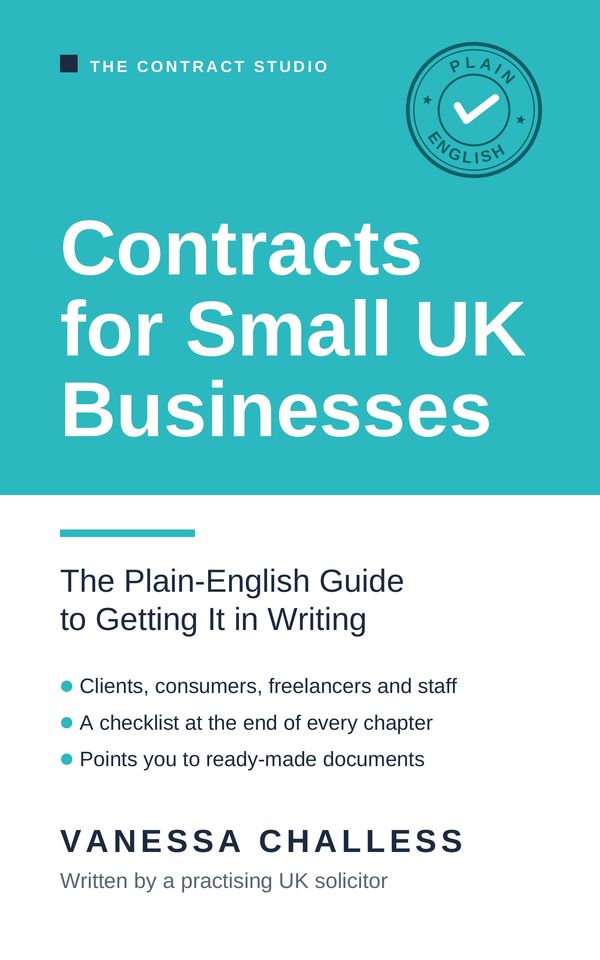
The Contract Studio Guides
Contracts for Small UK Businesses
The Plain-English Guide to Getting It in Writing
Get it in writing before it matters. A plain-English guide for small UK business owners, freelancers and first-time employers, by a practising UK solicitor.