Since 1 May 2026 there is essentially one way to put the rent up on a private assured tenancy in England: a rent increase by section 13 notice, served on the prescribed form, which is Form 4A. Rent review clauses, stepped rents and "the rent will go up by inflation each year" no longer work. If the tenant thinks your figure is too high, they can ask a tribunal to decide.
This post walks through the rules, the timing and the tribunal stage. It applies to England only.
Why section 13 is now the only route
Section 13 of the Housing Act 1988 used to apply mainly to periodic tenancies without their own rent review. The Renters' Rights Act 2025 changed that. Section 13 now applies to every assured tenancy other than a "relevant low-cost tenancy" (in short, social housing) (Housing Act 1988, s 13(1) and (4C)).
More importantly, the rent for a period cannot be higher than the rent for the previous period except through a section 13 notice, a tribunal determination, or an agreement following one of those. Any term in the tenancy that says the rent must or may go up some other way "is of no effect" (s 13(4A)). So a rent review clause is not just unenforceable; it is wasted ink.
The rules for a section 13 notice
The notice must be in the prescribed form and propose a new rent starting at the beginning of a new period of the tenancy (s 13(2)). For private tenancies from 1 May 2026, the prescribed form is Form 4A (SI 2026/354, reg 3(1)(d)). Form 4 is for social housing.
The new rent cannot start earlier than:
- two months after the date the notice is served;
- 52 weeks after the first period of the tenancy began, for a first increase; and
- if the rent has been increased before, 52 weeks after the last increase took effect, or 53 weeks where the rent has already gone up several times and the 53-week rule in section 13(3A) and (3B) applies.
All three come from section 13(2), (3A) and (3B). The practical effect is one increase a year, with at least two months' warning, starting on a rent due date.
Download a fresh copy of Form 4A from the GOV.UK assured tenancy forms page every time. Old versions, and old Form 4s, cause invalid notices.
Serving it
In practice, what matters is that you can prove the notice reached every tenant. Hand delivery with a witness, or first class post with a free certificate of posting from the Post Office, are the methods most landlords can evidence. Count the two months from the latest date on which service could be argued, and allow for postal days. Use email only as an extra copy, alongside one of those methods.
Serve every joint tenant, and keep a copy of exactly what you served.
What the tenant can do
A tenant who disagrees can apply to the First-tier Tribunal (Property Chamber) to challenge the proposed rent (s 14(A3)). They must do so before the new rent is due to start; otherwise the new rent takes effect as stated in the notice (s 13(4)). You and the tenant can also agree a rent lower than the one in your notice, or agree to leave it unchanged.
On 9 September 2026 the government announced that HMRC's Valuation Office will in future take over initial decisions on rent increase challenges. For now, tenants must still apply to the First-tier Tribunal (GOV.UK news, 9 September 2026). Check GOV.UK before you serve, in case the process has changed.
How the tribunal decides
The tribunal works out the rent at which the property might reasonably be expected to let on the open market, on the same terms, from the start date in your notice (s 14(1)). It disregards the effect of a sitting tenant, any increase in value from the tenant's own improvements, and any reduction in value caused by the tenant breaking the tenancy terms (s 14(2)).
Three points that surprise landlords:
- It cannot award more than you asked for. The new rent is the open-market rent if that is lower than your proposed rent, and otherwise your proposed rent (s 14ZB(5)). There is no upside in proposing a modest figure and hoping the tribunal goes higher.
- The increase waits for the decision. The new rent starts from the date in your notice if that is on or after the decision, otherwise from the first new period after the decision (s 14ZB(3)). There is no back-dating to your original start date.
- Hardship can delay it further. If the start date would cause the tenant undue hardship, the tribunal can direct a later date, up to two months after its decision (s 14ZB(3)(c) and (4)).
In the first six months of the tenancy, the tenant can also ask the tribunal to decide the open-market rent. If it is lower than the rent you agreed, the tribunal can reduce the rent from a date it sets, no earlier than the application (s 14(A1) and (A2); s 14ZA). So set the starting rent on evidence too. Put the earliest date for your next increase in the diary alongside the other renewal dates in our legal housekeeping checklist.
Evidence wins rent cases
Because the tribunal is asking what the property would let for today, your best protection is good comparables gathered before you choose the figure: similar properties nearby, with bedrooms, condition and whether furnished, and the date and source of each listing. If the property has outstanding repairs, fix them first. A tenant unhappy about disrepair is more likely to challenge, and condition affects market value.
It is also worth thinking about whether a full market increase is worth a void. A section 13 challenge is a dispute like any other, and our post on resolving a contract dispute without going to court has general tips on keeping it calm and documented.
How the Landlord Pack helps
The Rent Increase Worksheet in The Landlord Pack (England) works through four stages:
- Is an increase allowed yet? Boxes for the tenancy start date, the last increase, the earliest date a new rent can start (with a check on the 53-week rule), and the latest date to serve.
- What is the market rent? A comparables table with a source and date for each, the range, the differences between your property and the comparables, and the percentage increase. It works for setting the starting rent too.
- Before you serve. Checks on repairs, timing, bills included in the rent and whether you have the current Form 4A.
- Serving and the tribunal. A service record, a reminder to tell any guarantor (the pack's Deed of Guarantee requires notice within 14 days), and what to send the tribunal.
The pack's Written Statement of Terms includes the required statement that any rent increase must go through section 13, and has no rent review clause. Our guide to the written statement of terms under the Renters' Rights Act explains that requirement.
The worksheet does not fill in Form 4A for you or choose your rent. You download the form, complete it and serve it.
When to take advice
- The tenancy started before 1 May 2026 and you served, or are unsure whether to serve, a notice around the changeover.
- Bills or council tax are included in the rent and you are not sure how the form treats them.
- The tenant has already applied to the tribunal and you have not been through the process before.
- The tenant says the increase is retaliation for a repair complaint.
More quick answers are in the Landlord Pack FAQ, and if the tenant also asks about a pet, see how to reply to a tenant pet request.
This is general information, not legal advice on your situation.
See what's in The Landlord Pack (England).
Sources
- Housing Act 1988, s 13 (increases of rent)
- Housing Act 1988, s 14 (determination of open-market rent)
- Housing Act 1988, s 14ZA (challenge in the first six months)
- Housing Act 1988, s 14ZB (effect of determination)
- Assured Tenancies (Private Rented Sector) (Prescribed Forms and Transitional Provisions) (England) Regulations 2026, SI 2026/354
- GOV.UK: Assured tenancy forms for privately rented properties from 1 May 2026
- GOV.UK news: Stronger protections and greater confidence for renters (9 September 2026)
Letting a home in England?
The Landlord Pack (England) has the written statement of terms, holding deposit and pet request letters, a deed of guarantee and a possession grounds checklist for the Renters' Rights Act. Questions first? Read the landlord FAQ.
Related reading
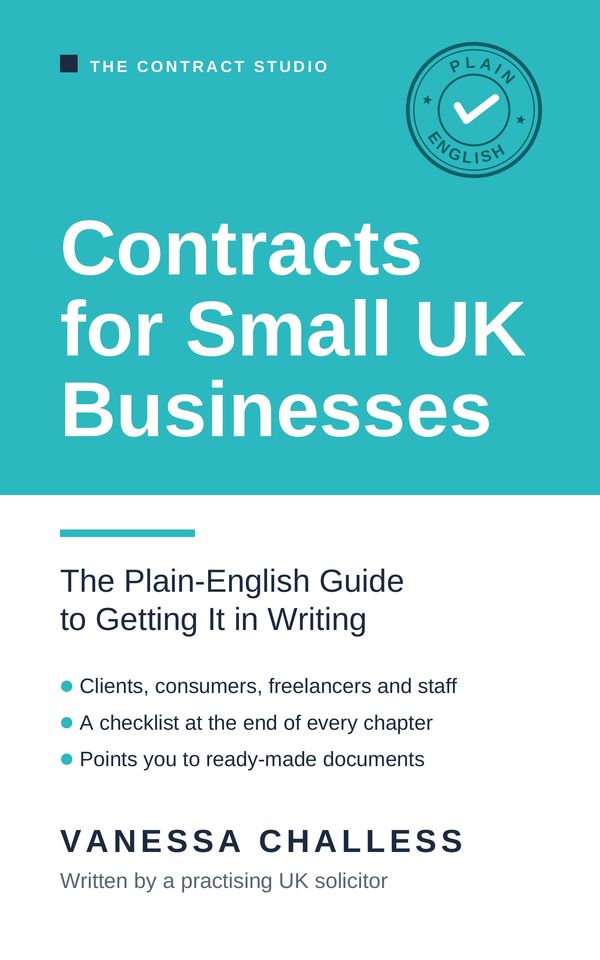
The Contract Studio Guides
Contracts for Small UK Businesses
The Plain-English Guide to Getting It in Writing
Get it in writing before it matters. A plain-English guide for small UK business owners, freelancers and first-time employers, by a practising UK solicitor.